When you’re buying shipping containers in Los Angeles—whether you’re considering new and used shipping container options or used shipping containers for storage or construction—understanding the shipping container delivery process is essential. This guide explains key delivery services, delivery methods ranging from flatbed trailers and tilt beds to crane delivery, and how to prepare your site so your container is delivered safely and efficiently.
You can expect clear communication from the delivery company regarding delivery day scheduling, delivery cost, and delivery truck access, along with guidance on clearance requirements, gravel or railroad tie placement, and choosing the right delivery option for a 40-foot shipping container or other container dimensions. With this guide, you’ll learn about common delivery challenges, how to choose the best delivery method, and practical tips to ensure a smooth shipping container delivery experience in Los Angeles.
What Is Included in Shipping Container Delivery?
Shipping container delivery typically includes transportation, unloading, and placement. The delivery method depends on container size, site access, and placement precision.
Delivery Truck Options
The delivery truck is the backbone of the shipping container delivery process and may be a flatbed trailer, tilt bed, or specialized roll-off truck, depending on the delivery method selected. Before arrival, the delivery driver will confirm site access, delivery location details, and any required permits to ensure a smooth delivery.
Expect the delivery truck to arrive on the scheduled delivery day and coordinate container placement with you or your delivery services provider. Communicating any obstacles at the delivery site in advance helps avoid delays and unexpected delivery cost increases.
Shipping Container Delivery Methods
Flatbed Trailer Delivery
Flatbed trailer delivery is the most common and cost-effective option when the site has level ground and clear access. The container is transported on a flatbed and unloaded using a tilt system, crane, or rollers. This method works best for open areas without clearance restrictions.
Tilt Bed Delivery
Tilt bed delivery uses a hydraulically tilting bed that slides the container onto the ground. It requires a straight, level approach and enough space for the container to slide safely. Tilt bed delivery often costs less than crane delivery but cannot be used on steep or uneven terrain.
Crane Delivery
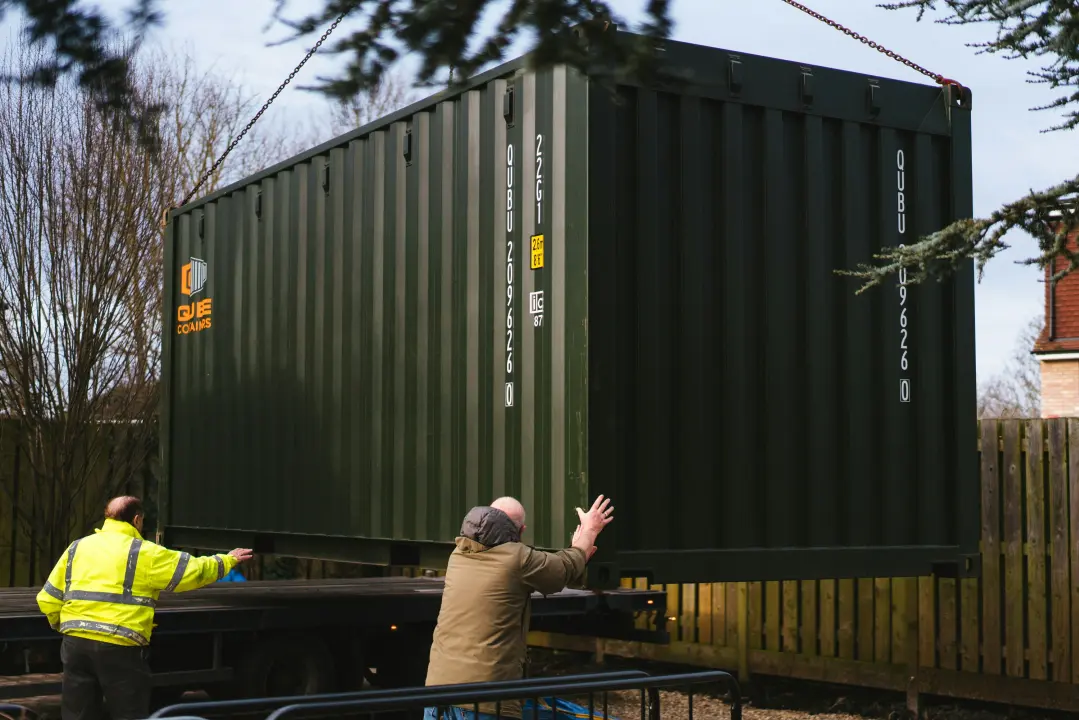
Crane delivery is ideal for tight spaces, uneven ground, or elevated foundations. A crane lifts the container off the flatbed and places it precisely on pads or railroad ties. While crane delivery increases delivery cost, it offers the most accurate placement.
Forklift Delivery
Forklift delivery is suitable for smaller containers and short-distance placement. Forklifts are limited by container weight and ground conditions, so the delivery site must be firm and level.
Shipping Container Delivery Cost: What Affects Pricing?
Shipping container delivery cost depends on distance, container size, delivery method, and site conditions. Factors that increase cost include crane service, tight access, permits, and additional labor.
Typical Delivery Cost Factors
- • Container size (e.g., 20ft vs. 40ft shipping container)
- • Delivery method (flatbed, tilt bed, crane)
- • Site clearance and ground preparation
- • Distance from the container depot
Request an itemized quote to confirm what is included and avoid unexpected charges.
Delivery Day: What to Expect
The delivery day is scheduled in advance to ensure the delivery truck can access your site and that the area is fully prepared for placement. On delivery day, confirm that access routes are clear, gravel pads or railroad ties are installed, and any utilities or obstacles are clearly marked.
The delivery driver will inspect the site and may recommend minor adjustments to improve placement. Be prepared for possible timing changes due to traffic, weather, or unforeseen delivery challenges.
How to Prepare Your Site for Container Delivery
Clearance Requirements
Measure overhead and side clearance carefully. Watch for power lines, tree branches, fences, and buildings that could block the delivery truck or crane. Proper clearance prevents delays and delivery cost increases.
Ground Preparation
A gravel pad or railroad ties provide a stable base and help prevent sinking or moisture damage. Ground preparation is especially important for 40-foot shipping containers due to their weight.
Space and Access
Mark the container placement area in advance and allow enough space for the delivery truck to maneuver. Confirm gate widths, driveway strength, and access routes with the delivery company.
Common Shipping Container Delivery Challenges
Common issues include insufficient clearance, soft ground, narrow driveways, and limited turning space. These challenges can lead to delays, rescheduled deliveries, or added delivery costs if not addressed early. In some cases, the delivery truck may be unable to place the container without additional equipment such as a crane or forklift.
Preparing the site in advance and sharing photos or measurements with the delivery company helps identify potential issues before delivery day. Early communication allows the delivery team to recommend the best delivery method and avoid unexpected complications.
Tips for a Smooth Shipping Container Delivery
- • Choose the correct delivery method for your site
- • Prepare gravel pads or support blocks in advance
- • Measure container dimensions and clearance carefully
- • Confirm delivery truck access routes
- • Schedule delivery during favorable weather
In addition to these steps, clearly mark the intended container placement area and remove any obstacles that could interfere with unloading. Staying available on delivery day to communicate with the delivery driver can also help resolve last-minute adjustments quickly. These proactive measures help ensure safe placement and keep delivery costs under control.
Why Choose Four Sons Logistics & Schedule Your Delivery
Four Sons Logistics offers shipping containers for sale, including new and used shipping containers, and provides professional shipping container delivery services throughout the Los Angeles service area. Our experienced team manages the entire delivery process—from flatbed and tilt bed transport to crane lifts and forklift assistance—ensuring your container is delivered safely and placed exactly where you need it.
We guide you through site preparation, clearance requirements, container dimensions, and delivery cost expectations to ensure a smooth experience. Contact Four Sons Logistics today to buy a shipping container or schedule delivery and receive a quote for efficient, dependable container delivery services in Los Angeles.
FAQ: Shipping Container Delivery in Los Angeles
How much does shipping container delivery cost in Los Angeles?
Delivery cost depends on container size, distance, site conditions, and method (flatbed, tilt bed, or crane). Request an itemized quote to confirm the exact price.
What are the common shipping container delivery methods?
Containers can be delivered by flatbed trailer, tilt bed, crane, or forklift. The choice depends on site access, container size, and placement requirements.
How do I prepare my site for a container delivery?
Ensure clear overhead and side clearance, level ground or gravel pad, and enough space for the delivery truck to maneuver safely.
Can a 40-foot shipping container be delivered to a tight or uneven space?
Yes, but it often requires crane delivery or extra ground preparation to place the container safely and accurately.
How long does shipping container delivery take in Los Angeles?
Delivery timing depends on distance, site readiness, and weather, but most deliveries are scheduled in advance and completed within 2-3 days.
___
Featured image credit: Phil Hearing on Unsplash
Shipping container shown for illustrative purposes only.