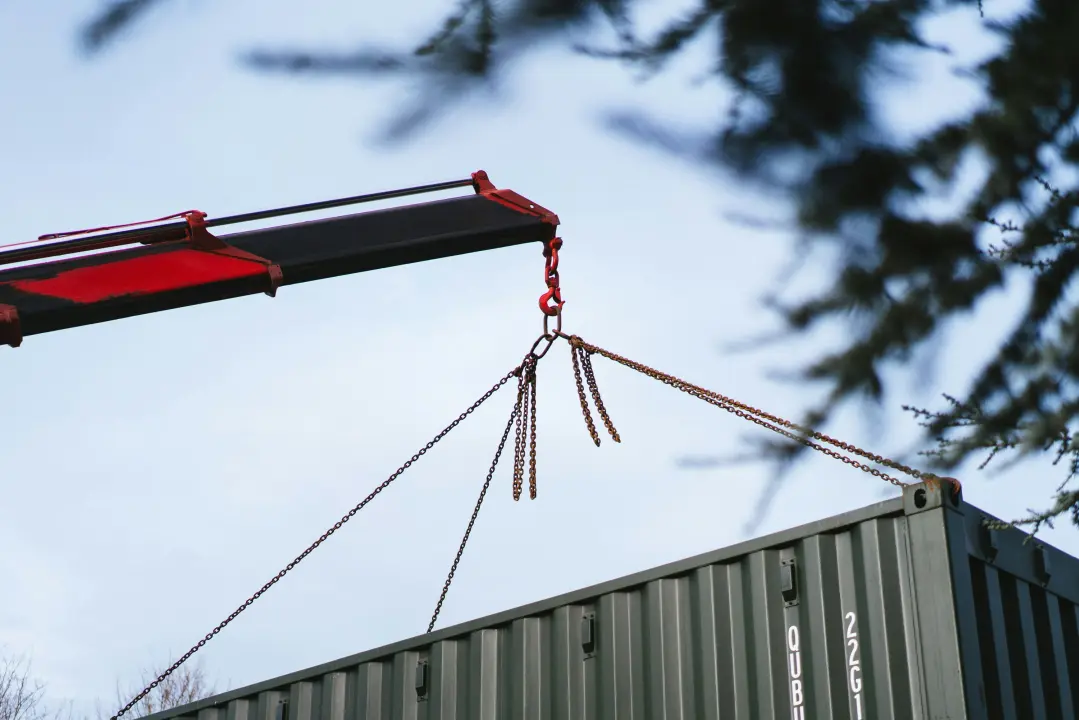
How Shipping Container Delivery Works
Shipping container delivery typically involves transporting a container using specialized trucks designed to safely load, move, and unload heavy cargo. The most common delivery methods include tilt-bed trucks and flatbed trailers, each suited for different site conditions.
The process usually follows these steps:
- Scheduling delivery based on availability and location
- Transporting the container to the site
- Positioning and unloading the container
- Final placement based on site access and orientation
Delivery timeframes can vary depending on distance, weather conditions, and site accessibility.
Common Delivery Methods
Tilt-Bed Delivery
Tilt-bed trucks are one of the most common delivery methods. The truck bed tilts and slides the container off directly onto the ground.
Best for:
- • Standard residential or commercial deliveries
- • Locations with sufficient clearance and straight access
Flatbed Delivery
Flatbed trailers require additional equipment, such as a crane or forklift, to unload the container.
Best for:
- • Tight or restricted spaces
- • Heavier or multiple containers
Space and Clearance Requirements
Proper space planning is one of the most important factors in successful delivery.
Typical requirements include:
- • Length clearance: ~60–100 feet (depending on container size)
- • Width clearance: at least 10–12 feet
- • Height clearance: minimum 14 feet (to account for truck height)
Insufficient space can result in failed delivery attempts or additional fees.
Site Preparation Checklist
Before delivery, the site should be prepared to ensure safe and efficient placement.
Key considerations:
- • Level and stable ground (gravel, concrete, or compacted soil)
- • Clear access path free of obstacles (trees, wires, vehicles)
- • Adequate turning radius for delivery trucks
- • Proper drainage to prevent water buildup
Preparing the site in advance helps avoid delays and ensures the container is placed correctly on the first attempt.
Factors That Can Affect Delivery
Several variables can impact how smoothly delivery goes:
- • Weather conditions – Rain or soft ground can limit access
- • Site accessibility – Narrow roads or sharp turns may restrict entry
- • Permits or local regulations – Some areas require approvals
- • Scheduling availability – Delivery windows may vary by location
Planning for these factors can help prevent last-minute issues.
Common Delivery Challenges (and How to Avoid Them)
Limited Access
→ Measure entry points and confirm truck clearance in advance
Uneven Ground
→ Use gravel or foundation support to stabilize placement
Incorrect Door Orientation
→ Decide container positioning before delivery
Obstructions Overhead
→ Check for power lines, branches, or structures
What to Expect on Delivery Day
On the day of delivery:
- • The driver typically confirms arrival time in advance
- • Delivery and unloading usually take 30–120 minutes
- • Final adjustments may be limited once the container is placed
Being present during delivery helps ensure the container is positioned correctly.
What to Remember Before Your Container Arrives
Shipping container delivery is a straightforward process when the right preparation is in place. Understanding delivery methods, ensuring proper site access, and preparing a stable, level surface can help prevent delays and unexpected complications on delivery day.
While requirements may vary depending on location and equipment, planning ahead makes the entire process more efficient and predictable.
If you’re preparing for a delivery and need help choosing the right container or understanding site requirements, Four Sons Logistics can help guide you through the process. You can also get a quote based on your location and delivery needs to ensure everything is properly arranged before scheduling.
Shipping Container Delivery FAQs
How much does shipping container delivery cost?
Delivery typically ranges from $200 to $1,000+, depending on distance, container size, and delivery method.
What is the most common shipping container delivery method?
Tilt-bed truck delivery, sliding the container off the truck onto the ground.
How much space is needed for container delivery?
Tilt-bed trucks usually require 80–100 feet of straight clearance.
Can a shipping container be delivered without a forklift?
Yes, tilt-bed trucks can place the containers without forklifts.
How should I prepare my property for shipping container delivery?
Ensure clear access, level ground, and space. Prepare a gravel pad, concrete base, or support blocks to stabilize the container.
___
Featured image credit: Phil Hearing on Unsplash