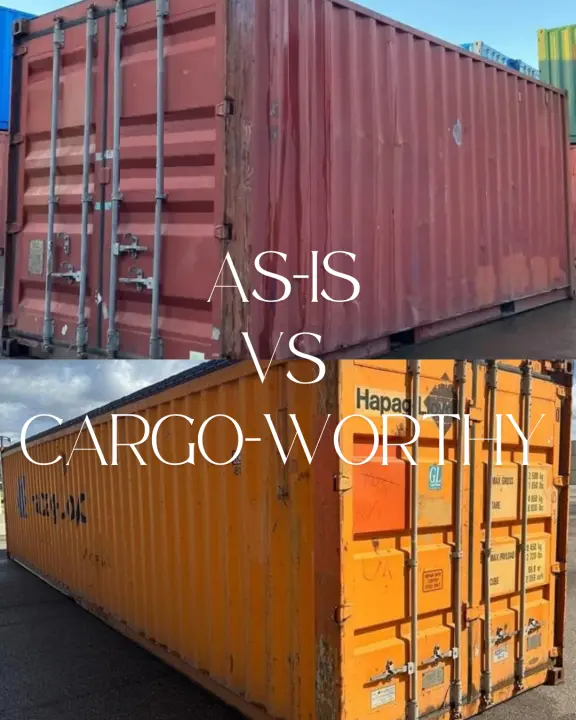
Shipping container grades refer to the condition and usability of a container, ranging from as-is containers to cargo-worthy containers and IICL-standard containers used for international shipping. The main difference between cargo-worthy containers and as-is containers is that cargo-worthy units are inspected and certified to ship cargo, while as-is containers are sold in their current condition without repairs.
Choosing the right shipping container grade is essential whether you want a container for storage, construction, or global transport. Understanding these differences helps you avoid costly mistakes and ensures you get the best value when you buy a shipping container.
This guide supports understanding container grades by breaking down inspection standards, repair considerations, and lifespan expectations so you can confidently choose the right container for your needs.
What Are Shipping Container Grades?
Shipping container grades refer to the overall condition, structural integrity, and usability of a container. These grades determine whether a container is suitable for shipping, storage, or modification.
The most common grades include:
- • Cargo-worthy (CW) – Approved for international shipping and safe to ship cargo
- • WWT (Wind and Watertight) – Suitable for storage
- • As-is containers – Sold in current condition without repairs
- • IICL containers – Meet strict industry inspection standards
- • New / one-trip containers – Typically in excellent condition
Understanding these categories is key when comparing shipping containers for sale or deciding whether to buy new or used units.
Cargo-Worthy vs As-Is Containers: Key Differences
Inspection Standards
Inspection is the first step in determining a container’s grade.
Cargo-worthy containers must pass a detailed inspection, including:
- • Structural integrity checks
- • CSC plate verification
- • No holes or major damage
- • Wind and watertight condition
These standards ensure the container can safely handle shipment across international routes. As-is containers, on the other hand, may fail one or more of these criteria and are sold without repairs, making them more suitable for local storage or building projects.
Repair Requirements
Repair needs vary significantly between grades.
Cargo-worthy containers often require:
- • Rust removal and treatment
- • Door seal replacement
- • Structural reinforcement
- • Hole patching
As-is containers are sold without repairs, which makes them more affordable upfront but not always the most cost-effective long term.
For buyers comparing used shipping containers vs new containers, repair costs should always be factored into the total investment.
Structural Integrity
Structural integrity determines whether a container can safely handle transport or long-term use.
Since containers are built to withstand harsh environments and years at sea, they are highly durable—but damage such as corrosion, dents, or stress can weaken them over time.
Containers classified as cargo-worthy (CW) or IICL standard are typically in good condition and safe for shipping. Units with compromised structure are downgraded to as-is.
Understanding IICL Standards and CSC Certification
What Is IICL?
The International Institute of Container Lessors (IICL) sets industry standards for container inspection and repair.
IICL containers follow strict guidelines to ensure:
- • Structural soundness
- • Consistent repair quality
- • Safe use in global shipping
Buying an IICL-standard container supports better decision-making when understanding container quality and long-term performance.
CSC Certification Explained
The CSC (Convention for Safe Containers) plate verifies that a container meets international safety standards.
To pass CSC inspection, a container must be:
- • Structurally sound
- • Free of major defects
- • Suitable for stacking and transport
This certification is essential for any container used to ship cargo internationally.
WWT Containers, CW, and Common Condition Terms
What Does WWT Mean?
WWT (wind and watertight) containers are sealed against external elements like rain and wind.
They are ideal for:
- • On-site storage
- • Equipment protection
- • Non-export use
However, WWT does not always mean the container is cargo worthy or ready for international shipment.
What Does CW (Cargo-Worthy) Mean?
CW stands for cargo-worthy, meaning the container is fit for shipping after inspection and repairs.
These containers:
- • Meet shipping standards
- • Are structurally sound
- • Have no leaks or holes
CW containers are typically in good condition or even excellent condition, making them a reliable choice for shipping goods overseas.
Dents, Rust, and Damage
Most used containers will show signs of wear, especially after many years at sea.
- • Minor dents – Usually cosmetic
- • Major dents – May affect structural strength
- • Rust – Can lead to corrosion if untreated
Always review inspection reports and repair history before purchasing used units.
Buying Guide: New vs Used Shipping Containers
New and One-Trip Containers
New or one-trip containers are used only once during transport.
Benefits include:
- • Minimal wear and tear
- • Longer lifespan
- • Better appearance
- • Fewer repairs needed
They are ideal if you want a container for long-term storage or international use, as they are usually in excellent condition.
Used and As-Is Containers
Used containers are more budget-friendly and widely available.
They are best suited for:
- • Storage solutions
- • Construction projects
- • Temporary use
While they can be a cost-effective option, buyers should carefully evaluate repair needs, overall condition, and transport requirements.
How to Choose the Right Container Grade
When selecting a container, consider:
- • Purpose (shipping vs storage vs building)
- • Budget (initial vs long-term cost)
- • Condition requirements (CW, WWT, or as-is)
- • Supplier reliability
This approach helps ensure you select the right container whether you plan to ship cargo, store goods, or modify the unit.
Shipping Containers for Sale: What to Look For
When browsing shipping containers for sale, prioritize sellers that provide:
- • Clear container grading (CW, WWT, as-is)
- • Inspection records and CSC status
- • Transparent pricing
- • Delivery and logistics support
Detailed listings with photos and container condition reports make it easier to compare used units and containers in good condition or better.
Get the Right Shipping Container for Your Needs
Choosing the right shipping container grade—whether cargo-worthy, WWT, IICL, or as-is—can make a significant difference in cost, performance, and long-term value.
At Four Sons Logistics, we offer a full range of new, one-trip, cargo-worthy, and as-is shipping containers, including used units in good condition and options in excellent condition. Whether you need a container for storage, construction, or to ship cargo internationally, our team ensures you get a reliable and cost-effective solution.
Ready to buy a shipping container or compare your options? Contact Four Sons Logistics today to request a quote and get expert guidance tailored to your needs.
FAQ: Shipping Container Grades & Buying Questions
What is the difference between cargo-worthy and as-is containers?
Cargo-worthy containers are inspected and certified to ship cargo, while as-is containers are sold without repairs and may not meet shipping standards.
What does WWT mean in shipping containers?
WWT means wind and watertight, indicating the container is sealed against external elements but may not be approved for international shipment.
Are IICL containers better than standard used containers?
Yes, IICL containers follow stricter standards and are typically in good condition or better, making them more reliable.
How long do used shipping containers last?
Used containers can last 10–25 years or more depending on maintenance, environment, and prior exposure to years at sea.
Should I buy a new or used shipping container?
Choose new containers if you want minimal repairs and longer lifespan, or used units if you need a more cost-effective option.
___
All images are original Four Sons Logistics inventory photos