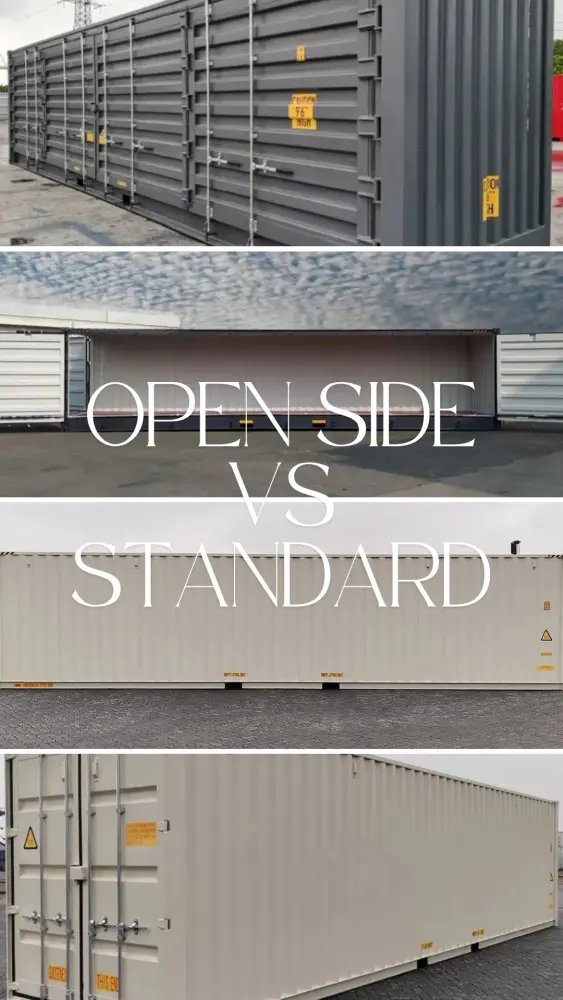
When comparing standard vs. open side shipping containers, key differences become clear for businesses that need flexible shipping, storage, and cargo handling solutions. Whether you’re searching for shipping containers for sale, new and used shipping containers, or planning to buy a shipping container for specialized cargo, understanding container types, specifications, and access options is essential for efficient logistics.
This guide breaks down the most common types of containers —including standard dry containers, open side containers, open-top containers, and high cube containers—so you can choose the right solution for your shipping and storage needs.
Open Side Shipping Containers: Features and Benefits
Full-Length Side Access for Easier Loading
Open side shipping containers provide full-length side openings, allowing easy loading and unloading of bulky, oversized, or palletized cargo. Unlike standard containers that only open at the end, open side containers allow direct access along the entire length of the unit.
This makes them ideal for:
- • Retail and mobile storefront setups
- • On-site storage and warehouse overflow
- • Projects requiring frequent cargo access
Improved Efficiency with Side Doors
Side doors are engineered to maintain structural strength while offering wide access for forklifts and manual loading. This reduces handling time and allows faster repositioning of goods without deep container access.
Open side containers are often used for:
- • Storage container conversions
- • Workshops and mobile workspaces
- • Fast-moving distribution environments
Flexible Cargo Handling for Oversized Items
Open side containers are especially useful for irregular or oversized cargo that cannot easily fit through standard container doors. This includes construction materials, machinery, and long industrial items.
Proper securing and lashing are required to ensure safe transport, especially during long-distance shipping.
Standard Shipping Containers: Reliable Global Transport Solution
Industry Standard Design for Versatility
Standard shipping containers, also known as standard dry containers, are the most widely used container type in global shipping. They are designed for palletized and boxed cargo, offering secure, weather-resistant transport across sea, rail, and truck networks.
Their standardized dimensions make them highly efficient for intermodal logistics.
Common Uses of Standard Dry Containers
Standard dry containers are cost-effective and widely available in both new and used conditions. They are commonly used for:
- • Exporting manufactured goods
- • Domestic freight transport
- • Onsite storage solutions
Popular sizes include 20ft and 40ft containers, depending on cargo volume needs.
Loading and Unloading Efficiency
Standard containers are typically loaded through end doors using forklifts and pallet systems. While efficient for uniform cargo, they are less suitable for oversized or irregularly shaped items compared to open side or open-top containers.
High Cube and Open Top Containers: Extra Space and Flexible Loading
High Cube Containers for Increased Volume
High cube containers offer an additional foot of height compared to standard containers, making them ideal for bulky or lightweight cargo that requires extra vertical space. They are commonly used for storage conversions and high-volume shipments.
Open Top Containers for Overheight Cargo
Open top containers allow loading from above using cranes or heavy equipment. This makes them suitable for machinery, construction materials, and bulk cargo that cannot fit through standard doors.
They often feature removable tarpaulin covers to protect cargo during transit.
Flat Rack Containers for Oversized Loads
Flat rack containers are designed for extremely large or heavy cargo that cannot be enclosed. Combined with open top containers, they provide flexible solutions for industrial shipping needs such as pipes, timber, and equipment.
Choosing the Right Container for Your Cargo
Matching Container Type to Cargo Needs
Selecting the right container depends on your cargo type, including:
- • Palletized goods → Standard dry container
- • Oversized machinery → Open top or flat rack
- • High-volume goods → High cube container
- • Temperature-sensitive goods → Refrigerated (reefer) container
- • Liquid cargo → ISO tank container
Specialized Container Options
Specialized containers such as insulated, half-height, and tunnel containers provide tailored solutions for unique shipping and storage requirements. Many businesses also use standard and high cube containers for modular storage conversions.
Get the Right Shipping Container for Your Business
Four Sons Logistics offers a wide selection of new and used shipping containers, including standard dry containers, open side containers, high cube containers, open-top units, and flat rack containers. Whether you need secure transportation, flexible storage, or a custom container solution, we provide reliable options to match your cargo requirements.
We also offer professional delivery and placement services to ensure smooth handling from purchase to final setup.
Contact Four Sons Logistics today to request a quote, explore available container types, and find the right solution for your shipping or storage needs.
Shipping Containers FAQ: Sizes, Types, and Buying Guide
What is the difference between open side and standard shipping containers?
Open side containers have full-length side access for easier loading, while standard containers only open at one end.
Are open side containers more expensive than standard containers?
Yes, open side containers are typically more expensive due to their specialized design and added access features.
What is a high cube shipping container used for?
High cube containers provide extra height for bulky or lightweight cargo and are often used for storage conversions or high-volume shipments.
Can shipping containers be used for storage?
Yes, shipping containers are widely used for secure onsite storage of tools, equipment, inventory, and household goods.
How do I choose the right shipping container size?
It depends on your cargo volume and type. Common sizes include 20ft and 40ft containers, with high cube options for extra vertical space.
___
All images are original Four Sons Logistics inventory photos